by Amineddoleh & Associates LLC | Mar 19, 2015 |
On April 14, the Institute for the Liberal Arts (ILA) co-sponsored this event with the Boston College Fine Arts Department and Law School featuring Leila Amineddoleh.
Legal Issues in Art Restitution: Historic Looting, the Monuments Men, and Nazi Looted Art
Legal Issues in Art Restitution from Institute for the Liberal Arts on Vimeo.
by Amineddoleh & Associates LLC | Mar 16, 2015 |
Not only are art and antiquities beautiful, fascinating, and rich in cultural significance, but they can be great investments….and a great way to hide assets. Read my guest post, “Recovering Art Assets & Cultural Heritage Property,” on Fred Abram’s Asset Search Blog: http://www.assetsearchblog.com/2015/03/16/recovering-art-assets-cultural-heritage-property/
by Amineddoleh & Associates LLC | Mar 3, 2015 |
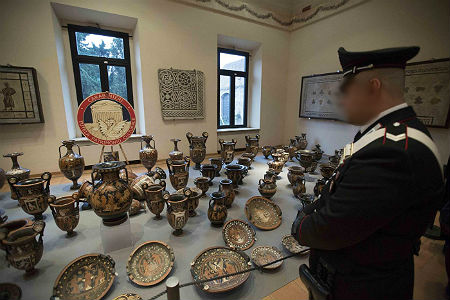
 The start of 2015 has been triumphant for the Italian Carabinieri’s Tutela Patrimonio Culturale (http://www.carabinieri.it/cittadino/tutela/patrimonio-culturale/introduzione), the organization’s cultural heritage task force, known as its “Art Squad.” In January, it was announced that a cache of antiquities, valued at $58 million were recovered in Switzerland. (http://nypost.com/2015/01/21/italy-unveils-record-58m-haul-of-antiquities-from-swiss-raids/) The looted works had been smuggled from Italy across the border over the past decade. The Carabinieri, Italy’s military police, recovered rare antiquities seized during raids by Swiss police in Basel at the warehouses of a well-known Sicilian art dealer, Gianfranco Becchina. Becchina is infamous in the cultural heritage realm for his role in the black market antiquities trade, and was profiled in the book “The Medici Conspiracy.” According to a Carabinieri official, Mariano Mossa, “This is by a long shot the biggest recovery in history in terms of the quantity and quality of the archaeological treasures.” The recovery was celebrated internationally with the release of photos of a large storeroom of recovered treasures.
Then last week, it was reported by the NY Times and international news sources that a stolen Etruscan statuette and a Tiepolo painting, “The Holy Trinity Appearing to Saint Clement,” was returned to Italy. (http://artsbeat.blogs.nytimes.com/2015/02/24/federal-officials-return-tiepolo-painting-and-etruscan-bronze-to-italy/?_r=0) The painting was stolen from a home in Turin in 1982, and went missing for decades. It appeared at auction in New York in January 2014. After being informed that the work was stolen, the consignor agreed to its seizure and return. Italian authorities are currently investigating the circumstances surrounding the theft and importation into the US. The Etruscan statuette was stolen, along with other artifacts, from an archaeological museum in Pesaro in 1964. The object was exchanged multiple times through the years, and was recently offered for sale at auction in New York. This consignor was also informed of the work’s problematic past, and agreed to the seizure and repatriation.
February also witnessed the return of 200,000 euros worth of looted cultural objects located in an agriturismo in the Umbrian village of Norcia. (http://roma.repubblica.it/cronaca/2015/02/25/foto/reperti_rubati_a_roma_e_trovati_incastonati_in_un_agriturismo-108180045/1/#1) Artifacts from the Catacomb of San Callisto were looted from the early Christian catacomb and were found incorporated into architectural elements of the Umbrian hotel. They are currently in the custody of Italian authorities.
And the final news headline involving Italian cultural objects was the return of 17th century books found in California. (http://www.latimes.com/local/lanow/la-me-ln-400-year-old-books-italy-20150227-story.html) The two books were stolen from a library in Italy and sold to an American buyer unaware of the volumes’ origins. Interestingly, the buyers claim to have purchased the books from a reputable source, and they even received documentation of the legality of the sale. In compliance with due diligence standards, the buyers assert that they received provenance information and export documents from the Italian authorities. It has not yet been reported whether this documentation is fake, but the buyer has willingly forfeited the items.
These recoveries demonstrate the necessity for cooperation amongst international law enforcement agencies, and aptly display why the Carabinieri has become so lauded in the field of cultural heritage preservation.
by Amineddoleh & Associates LLC | Feb 23, 2015 |
Last winter, Leila Amineddoleh authored an article about Nazi-looted art, the Monuments Men, and the “Gurlitt Collection” for the NY State Bar Association. The piece examined legal issues related to the art objects in Cornelius Gurlitt’s collection of legally acquired, and looted, art, in addition to a broader examination of statute of limitations issues related to Nazi-loot. Leila’s article was updated twice due to advancements in the case.
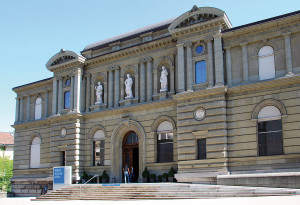 Last spring, after Mr. Gurlitt’s death, it was announced that he left his collection to the Kunstmuseum Bern. The museum was given six months to accept the gift. In November, mere days before the museum made its announcements, an estate issue arose. Uta Werner, Mr. Gurlitt’s 86-year-old cousin, applied to the Munich Probate Court for a certificate of inheritance for his estate, provoked by a psychological report concerning Mr. Gurlitt’s limited mental capacity at the time of the drafting of his will. The president of the German Forum for Inheritance Law noted that there were indications that Mr. Gurlitt was a “misfit” suffering from delusions. Ms. Werner has articulated that if she succeeds on her ownership claims, she intends to restitute Nazi-looted items to their rightful owners, as determined by a court. The Kunstmuseum Bern addressed the delay in a statement earlier this month,
“At its last meeting, the Board of Trustees of the Kunstmuseum Bern categorically resolved that it will establish a “Gurlitt” research body and defined its tasks and structure. However, this decision can only first be implemented when the pending application of Cornelius Gurlitt’s cousin for a certificate of inheritance has been probated in Munich. The Board of Trustees regrets this delay, in particular because it will impede the settlement of restitution cases that have already been clarified and endorsed by the Kunstmuseum Bern, but the circumstances are beyond its control.”
In the meantime, representatives of the rightful owners are optimistic that restitution will begin before estate issues are resolved. Christopher Marinello, an attorney for the Rosenberg family (the family owned a Matisse painting in Gurlitt’s collection that Cornelius Gurlitt had agreed to return), expects “an expeditious restitution over the next few weeks.”
http://papers.ssrn.com/sol3/papers.cfm?abstract_id=2434205
by Amineddoleh & Associates LLC | Jan 22, 2015 |
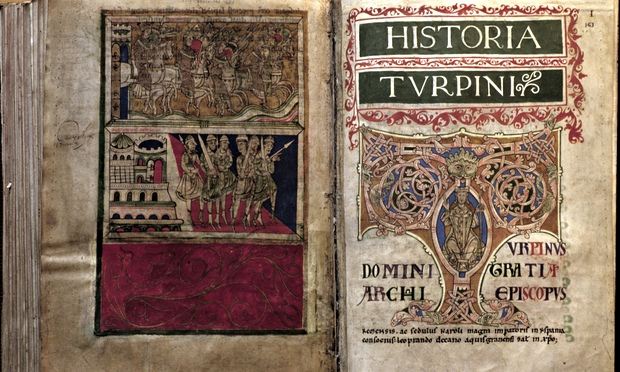
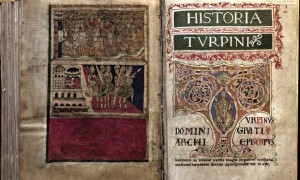 It is exciting to see Spanish prosecutors call for criminal penalties for a cultural heritage crime, as criminal penalties may arguably be the only effective deterrent for theft. The disappearance of the Codex Calixtinus made international news in 2011, as the 12th century manuscript has been described as Europe’s first “travel guide,” providing information to Catholic pilgrims traveling along the Camino de Santiago. After surviving through the centuries, the priceless object was stolen by an electrician from an unlocked vault. Leila Amineddoleh wrote about the theft of the codex (and recommendations for protecting Spanish patrimony) here.