by Amineddoleh & Associates LLC | Feb 15, 2017 |
 Amineddoleh & Associates’ client Samuel Amoia was recently featured in Forbes magazine for his impressive work completing numerous commissioned furniture pieces and interiors for the exclusive Itz’ana Hotel and Residences in Belize. The Forbes article, is one of many honors celebrating Amoia’s unique aesthetic and flourishing design career.
Known for his modern geometric designs, organic textures, international client base, and celebrity fans, Samuel Amoia has enamored the art and design world with numerous projects ranging from high-end residential and commercial properties to custom furniture for clients including Stella McCartney, Calvin Klein, and Dior. In 2015, Amoia was named one of Vogue magazine’s “Young Interior Designers to Watch” and has been featured in numerous high-profile publications such as The New York Times, Elle Decor and Architectural Digest.
Amoia’s interior design career began after meeting and subsequently working  for renowned interior designer Stephen Sills. Amoia now runs his own Manhattan-based interior design firm, Samuel Amoia Associates. In 2015, he also launched Amoia Studio, his furniture design company, with his brother, Dominic. In 2016, Amoia Studio introduced its first collection of furniture at DeLorenzo Gallery in Manhattan.
With the Itz’ana Hotel and Residences set to open later this year, Amoia continues to busy himself with large-scale interior design projects and commissions in New York City and Miami. He is currently developing “Arbor Grove,” a set of 52 residential condominiums in Miami’s Coconut Grove neighborhood, with all exteriors and units specifically designed by Amoia himself.
Amineddoleh & Associates LLC proudly represents Samuel Amoia on intellectual property matters.
by Amineddoleh & Associates LLC | Jan 17, 2017 |
 With the soaring prices of art, it’s essential that buyers protect their purchases. The Clarion List featured Amineddoleh & Associates LLC for our advice to collectors in the group’s 2017 resolution article, “2017 Resolutions You Must Make.” The article provides advice to art collectors. As always, we recommend that our clients complete due diligence prior to purchases in order to protect art assets. Read the article here.
by Amineddoleh & Associates LLC | Jan 14, 2017 |
 The Art Newspaper recently reported that the long-held freeze on museum loans between Russian and U.S. museums could finally come to an end.
In December, both the Senate and President Obama approved the Foreign Cultural Exchange Jurisdictional Immunity Clarification Act. The Act is intended to protect artworks and culturally significant objects on temporary loan to the United States from foreign institutions, by granting those artworks immunity from seizure.
Director of the State Hermitage Museum in St. Petersburg, Mikhail Piotrovsky, openly praised the Act to The Art Newspaper, noting that the law could potentially provide new assurances that Russian-owned artworks would not be subject to seizure while in the United States. Piotrovsky’s statements came while visiting his long-time friend President-elect Donald J. Trump at his Florida home in December. Trump himself has been very vocal about his intent to warm US-Russian relations, so the possibility of seeing Russian-owned artworks once again in the U.S. could become very real after his January inauguration.
The new law has nevertheless faced heavy criticism from groups including the Holocaust Art Restitution Project. Although objects subject to Nazi-era restitution claims are not afforded protection under the Act, critics point out that the new Act could extinguish valid restitution claims, such as claims against the Russian and Cuban governments.
The Russian government suspended all artwork loans to US museums in 2011, fearing that any loaned artwork could be seized as part of an outstanding court order requiring Russia to turn over a vast library of religious texts to the Chabad-Lubavitch Orthodox Jewish community. In 2010, a federal judge in Washington had ordered that the Russian government turn over the “Schneerson Library,” a collection of more than 70,000 religious texts and documents to the Chabad organization. The organization has been trying to regain possession of the library for years, which was seized by the Bolsheviks during World War II, and Russia has yet to return the documents. In response to Russia’s cancellation of museum loans to the United States, US museums have also frozen lending artworks to museums run by the Russian government.
by Amineddoleh & Associates LLC | Jan 10, 2017 |

48441625 – innovation.
Amineddoleh & Associates LLC was featured in Digital Guardian this morning. In the feature, Leila discusses the best way to secure intellectual property against loss or compromise. You can read her advice, along with perspectives from others, online: https://digitalguardian.com/blog/how-to-secure-intellectual-property#Amineddoleh
by Amineddoleh & Associates LLC | Jan 5, 2017 |
A few weeks ago, artist Anish Kapoor posted a photo to Instagram of his middle finger swathed in the “World’s Pinkest Pink” paint pigment with the caption “Up yours #pink”. The photo was a pointed reply to artist Stuart Semple, who had expressly banned Kapoor from acquiring the pink pigment and requiring online purchasers of the color to sign a legal declaration that they were not affiliated with Kapoor in any way.
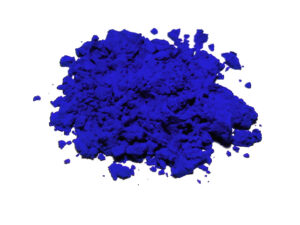
International Klein Blue
Semple’s efforts to ban Kapoor from accessing his pigments reflect his continued displeasure with Kapoor’s own monopoly of a color: Kapoor is the only artist allowed to use “Vantablack,” a material developed by British company Surrey NanoSystems and purportedly the darkest material in existence. Surrey NanoSystems’s decision to grant exclusive rights to the artistic use of Vantablack to Kapoor was openly condemned by many other artists like Stuart Semple, who wished to use the Vantablack in their own works or believe that colors should be freely accessible to all artists.
The exchanges between Semple and Kapoor reignited a longstanding debate of whether someone can exclusively “own” a color. In most countries a color can be “owned” as a trademark, just like any other logo, design or word. In the US, a color may qualify as a trademark if that color does not serve a functional purpose (such as the colors orange and yellow for safety equipment) and if the color has acquired a “secondary meaning” that identifies that color with a particular brand or source rather than the product itself.
But trademark protection of colors is often limited to very specific commercial purposes and uses. We are all familiar with Tiffany & Co.’s distinctive “Tiffany Blue,” but its trademark rights only apply to boxes, handbags, and catalogue covers. “U.P.S. Brown” applies only to its delivery services, and 3M’s canary yellow color is trademarked only for its popular Post-its.
One of the most famous cases involving the limitations of trademark ownership of a specific color was the dispute between shoe designer Christian Louboutin and Yves Saint Laurent after YSL launched a line of shoes that included a red shoe with a red sole. In 2012, the New York Court of Appeals concluded that Christian Louboutin’s trademarked glossy red-lacquered “outsoles” were only protectable where the red outer sole contrasts with rest of the shoe, and YSL’s shoes, which were entirely red, did not violate Louboutin’s trademark.
So then, how would someone be able to prohibit everyone except one person from using a color like Vantablack? The answer is likely in patent law, which permits a patent owner to exclude anyone from making, using, or selling the patented invention. Unlike trademark law, a patent does not necessarily protect ownership of the color itself. Rather, a patent grants to the owner exclusive ownership rights for the underlying invention, process, or composition that creates the color. It therefore follows that Surrey Nanosystems, as owner of the patents for Vantablack material—not the color itself— would have the right to exclude all artists except Anish Kapoor from using it.
There is a similar common misconception that French artist Yves Klein patented his famed matte blue color known as “International Klein Blue” or “IKB”. In fact, Klein secured a French patent in 1960s for the unique process he developed with art supplier Edouard Adam in Paris to achieve IKB. Although many—from major fashion designers to the Blue Man Group— have attempted replicated IKB, the only places where one can access the “authentic” IKB are Yves Klein’s artworks and the original art supplier in Paris, where the patented process to attain IKB is still used.
Perhaps like the Blue Man Group’s replication of Yves Klein blue, we can look for Semple to create his own “World’s Most Blackest Black” pigment in the future. But in the meantime Stuart Semple has released —and already sold out of—a new pigment called “the World’s Most Glittery Glitter,” which “anyone apart from Anish Kapoor can have,” continuing his mission to #sharetheblack.

 Amineddoleh & Associates’ client Samuel Amoia was recently featured in Forbes magazine for his impressive work completing numerous commissioned furniture pieces and interiors for the exclusive Itz’ana Hotel and Residences in Belize. The Forbes article, is one of many honors celebrating Amoia’s unique aesthetic and flourishing design career.
 for renowned interior designer Stephen Sills. Amoia now runs his own Manhattan-based interior design firm, Samuel Amoia Associates. In 2015, he also launched Amoia Studio, his furniture design company, with his brother, Dominic. In 2016, Amoia Studio introduced its first collection of furniture at DeLorenzo Gallery in Manhattan.

